
Dignity at Work Training
Duration: One Day.
Content: Last updated: Feb 2026
Suitable for: Managers / team members
Group Size: 1 – 15 Delegates.
_____________________________________________________________________________________
Overview:
We provide a modern, highly interactive, and completely practical half day refresher event for staff and a one day full training event for managers.
The events are designed to be accessible and relatable to all levels of employees and explore what promoting Dignity and Respect at work means in practical terms, why it is important and why behaviour and language previously (perhaps) tolerated at work is now considered wholly unacceptable in 2026.
Most importantly, the events cover how to ‘call out’ poor workplace behaviour/language including the phrases we should use to our colleagues to bring about lasting change. The events also clarify that promoting Dignity and Respect at work and calling out inappropriateness is everyone’s responsibility.
_____________________________________________________________________________________
Background:
In 2026, Dignity at Work continues to be a major consideration in many UK organisations across a very broad range of sectors including manufacturing and production and office/hybrid working environments. The recent duty to take steps to prevent sexual harassment at work (introduced in 2024) has reinforced the importance of developing good policies and delivering refresher training to all.

We provide a range of interactive development options which typically detail:
-
How and why people can legitimately perceive an identical workplace situation in different ways.
-
Clear definitions of workplace harassment, inclusion and dignity at work.
-
Examples of language and conduct which may have previously been tolerated but is now wholly unacceptable in 2026.
-
Why it is not always possible to ‘know your audience’.
-
The impact of social media in respect of Dignity at Work.
-
Clarification of what ‘banter’ is and why ‘banter’ may be used to explain but not necessarily excuse poor workplace behaviour or language.
-
Definitions and examples of micro aggressions / passive aggressive behaviours and tips on the language to use when highlighting this to others.
-
How promoting Dignity and Respect at work has clear benefits to individuals, teams and organisations and can positively impact on areas such as attendance, productivity, employee wellbeing and employee turnover.
-
For, managers, clarification of the clear difference between leadership and management, legitimate performance management and bullying and harassment.
-
Recognising the signs of inappropriate behaviour and conduct in teams.
-
Interactive case examples.
-
Tools for success – including skills for holding difficult conversations, challenging behaviour, recognising clear boundaries, defining high risk conduct and promoting inclusive behaviours.
-
Tips and techniques for promoting Dignity at Work – both at a team and individual level.
_____________________________________________________________________________________
Example Materials: 

Whilst we always work with our partner organistaions to develop bespoke and tailored development options, we attach below extracts from previous events for illustrative purposes.
_____________________________________________________________________________________
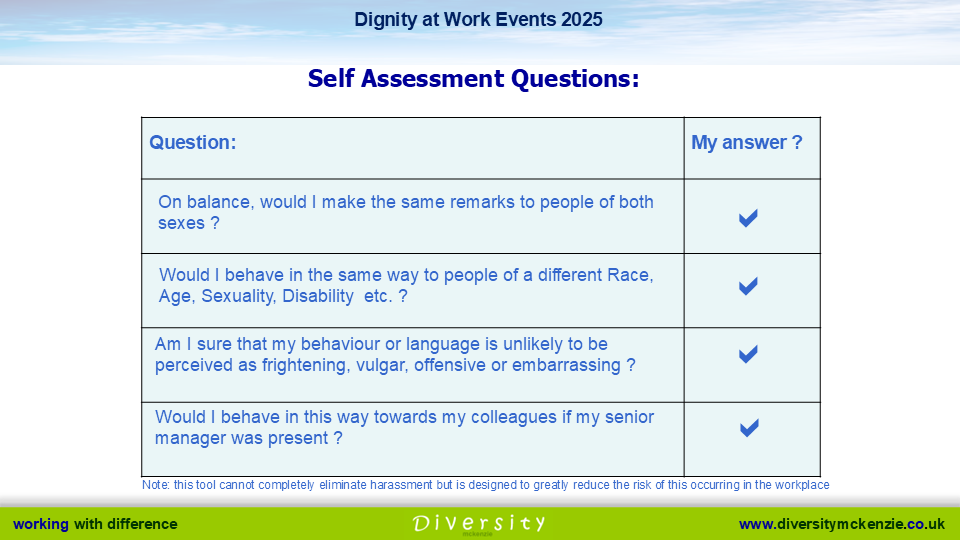
Harmless Banter or Risks of Inappropriate Behaviour ?
We use the following tool to help people decide …
Wrong Hat for the Wrong Occasion ?
Some people like to tell us to ‘take them as we find them’ and that they behave in the same way with everyone everywhere. As part of our events, we explore why some behaviours and especially language (e.g. “sweetheart” and “love”) might be acceptable at home but may be considered by some to be totally unacceptable at work.

____________________________________________________________________________
Good Performing Colleague ? Poor Workplace Behaviour ?
Some people, in the course of doing a ‘good job’ can also demonstrate somewhat questionable behaviours. This tool examines the importance of appraising knowledge, skills and behaviours in others and the appropriate tools to use for each:


____________________________________________________________________Example Management Toolbox:

© 2026 McKenzie LLP
_____________________________________________________________________________________
Recent McKenzie Customers:
Recent customers choosing this event or one to one coaching include:
Cambridge University, The National Fire Chief’s Council; Crossrail, Scottish Water, Nissan UK, Boxes and Packaging, Donaldson Engineering, Knauf, Thales, Queen Margaret University, The Security Industry Authority, MSC Cruises, The Business Disability Foundation, The Care Quality Commission, Level 3 Communications, London and South Bank University, The Civil Service Sports (CSC), The NHS, The US Embassy (London) The Company of Biologists, The British Association for Counselling and Psychotherapy, and more.
Please contact us to discuss further:
_________________________________________________________________________________
